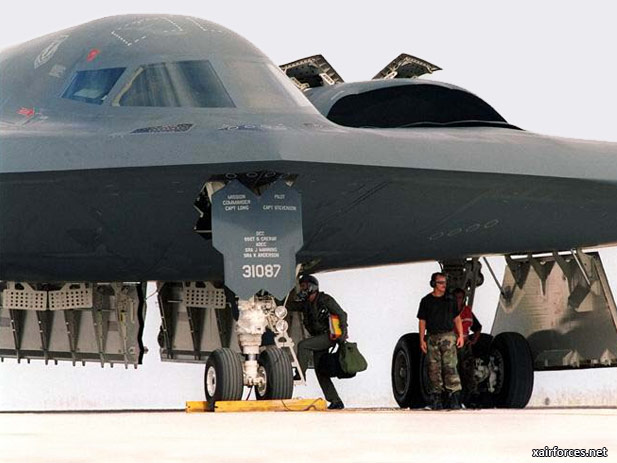
B-2 Bomber to Use BAE Systems ES Electronic Warfare System

BAE Systems has won a contract from Northrop Grumman – Aerospace Systems to provide Electronic Support Measure (ESM) systems for use on all 20 B-2 Spirit bombers, marking BAE Systems’ presence on all three of the U.S. Air Force’s Low Observable platforms; the F-22, F-35 and B-2 aircraft.
Northrop Grumman selected BAE Systems in a competitive bid process over the incumbent and industry’s top Electronic Warfare providers, to replace the aircraft’s 30-year-old legacy AN/APR-50 ESM system. The system, in conjunction with the radar warning receiver, detects electronic threats encountered by the B-2 and provides situational awareness of detected threats to its air crew.
“As the provider of similar capability on 5th generation fighter aircraft, BAE Systems is well suited to modernize the ESM capabilities of the B-2 fleet,” said Brian Walters, vice president and general manager of BAE Systems’ Electronic Combat Solutions business.
“The B-2 is a long-range mission capable aircraft that must have stealth, mission planning and exceptional situational awareness to reach its targets through highly developed, increasingly sophisticated enemy defenses. Our ESM System will provide aircrews with real-time threat warning and situational awareness of threat emitters and will allow crews to alter their planned flight path through contested airspace to safely complete their mission.”
The B-2, also known as the “Stealth Bomber,” is the premier deep-threat strike aircraft designed to penetrate dense anti-aircraft defenses and deploy conventional and nuclear weapons. Northrop Grumman is the U.S. Air Force’s B-2 platform provider and prime contractor for all B-2 modernization efforts involved with the aircraft’s service life extension into 2058.
The ESM contract work will be conducted in Nashua, N.H. and Cambridge, Mass.
Source: NASHUA, New Hampshire - 02 March 2012 - BAE Systems News
Photo: U.S. Air Force B-2 Bomber Threat-Warning System Upgrade. (Photo by www.airforceworld.com)
(2.03.2012)
|



 4/5 Generation Fighters