While high-end combat and maritime patrol capabilities are concentrated in the ROK Air Force, Navy, and Coast Guard, the National Police have expanded their rotary-wing capacity to address internal security, counter-terrorism, and rapid emergency response.
REPUBLIC OF KOREA NATIONAL POLICE • Daehanminguk GyeongchalPersonnel: ε13,500 (Total Gendarmerie & Paramilitary active force). Status: Operational. Strategy: National law enforcement, counter-terrorism, and integrated emergency response for public safety.
Forces by Role & Equipment by Type• HELICOPTER (Active Units)
Multi-Mission & Law Enforcement:
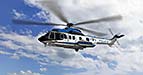
- Airbus H225 (Super Puma).
- (Note: These heavy-lift, multi-mission helicopters are the latest acquisition for 2026, intended to enhance law enforcement, counter-terrorism, and medical emergency response capabilities across South Korea).
Tactical Support & Utility:
- (Note: The Police Aviation wing operates in coordination with the broader paramilitary aviation structure. While specific legacy airframe counts for the Police are not broken out individually in the 2026 directory, the ROK Coast Guard—the primary paramilitary aviation body—provides integrated support with the following types):
- AS565MB Panther (Multi-role support).
- AW139 (Tactical transport).
- KUH-1 Surion (Indigenous medium transport).
• SUPPORTING PARAMILITARY AVIATION (COAST GUARD)
The following assets are managed by the ROK Coast Guard but are integral to the national internal security aviation framework.
Maritime Patrol & Surveillance (Fixed-wing):
- 4 CASA CN235-110 MPA.
- 1 CASA C-212-400 MP.
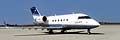
- 1 Bombardier CL-604 (Tactical PAX/VIP).
Search & Rescue (SAR - Helicopter):
- 3 Sikorsky S-92.
- 8 Kamov Ka-32 Helix C.
Strategic Note: The Republic of Korea's paramilitary aviation domain in 2026 is defined by a modernization shift toward versatile, multi-mission platforms. The Korean National Police have prioritized the acquisition of the Airbus H225 to provide a heavy-lift capability that bridges the gap between civilian law enforcement and military-grade special operations support. This integration is part of a broader national strategy to ensure a high-readiness response to diverse threats, ranging from urban terrorism to large-scale disaster management. Additionally, the paramilitary forces can be supplemented by the Civilian Defence Corps, which maintains a reserve of approximately 3,000,000 personnel available for national mobilization in extreme internal security scenarios.



 4/5 Generation Fighters



-airbus-a330-mrtt.jpg)