Institutionalized Sovereignty: A Comprehensive Analysis of the Twenty-Year Strategic Cooperation Between Airbus and the German Air Force at Manching
The geopolitical landscape of the twenty-first century has necessitated a paradigm shift in military procurement and sustainment, moving away from traditional transactional models toward integrated industrial partnerships. In the Federal Republic of Germany, the most prominent realization of this shift is located at the Manching facility, where Airbus Defence and Space and the German Air Force (Luftwaffe) have cultivated a twenty-year operational synergy. This collaboration, centered on the Eurofighter Typhoon and the Panavia Tornado platforms, represents a critical intersection of military readiness and industrial innovation, ensuring that Germany’s air sovereignty is maintained through domestic technical excellence and rapid logistical responsiveness. By integrating military personnel and industrial specialists within shared organizational structures, the Manching model has effectively eliminated the traditional boundaries between end-user requirements and industrial production capabilities, establishing a template for European defense cooperation in an era of heightened security competition.
The Evolution of the Cooperative Maintenance Framework
The contemporary architecture of the Airbus-Luftwaffe partnership was inaugurated on January 1, 2003, with the establishment of the Eurofighter Cooperation Cell (EKZ). This initiative was born from the recognition that the Eurofighter, as a software-defined and highly complex multirole platform, required a maintenance regime that could bridge the gap between routine field inspections and deep industrial overhaul. The primary mission of the EKZ was the guarantee of 24/7 mission fleet availability, a requirement that has only gained significance as the Luftwaffe’s operational tempo has increased in response to NATO collective defense obligations. The EKZ serves as the physical hub where Bundeswehr soldiers and Airbus employees perform flight-hour-dependent inspections, heavy repairs, and the integration of competitive modifications.
Shortly following the creation of the EKZ, the collaboration expanded into the digital and logistical realms with the activation of the Eurofighter System Support Centre (SUZ EF) on April 1, 2003. While the EKZ manages the physical airframe, the SUZ EF serves as the technical and logistical heart of the weapon system, providing in-service support, software maintenance, and system analysis. The SUZ EF operates a dedicated user help desk that provides 24/7 technical assistance to air force squadrons, creating a direct feedback loop between operational pilots and the engineers responsible for the aircraft’s systems. This integrated structure allows for a unique synthesis of operational experience and industrial know-how, facilitating the rapid identification and resolution of technical issues that arise during active service.
Institutional Milestone - Date of Establishment - Primary Functional Focus
Eurofighter Cooperation Cell (EKZ) - January 1, 2003 - Airframe maintenance, heavy repairs, and physical modifications
Eurofighter System Support Centre (SUZ EF) - April 1, 2003 - Software maintenance, logistics, and user help desk support
Tornado System Support Centre (SUZ Tornado) - November 24, 2004 - Avionics software, mission evaluation, and electronic warfare
Tornado Cooperation Cell (TKZ) - November 28, 2014 - Service Life Enhancements (SLE) and major overhauls
The workforce supporting these institutions has grown into a formidable assembly of expertise. Currently, approximately 270 soldiers and more than 500 Airbus employees work side-by-side in Manching, operating under cooperative management teams. This personnel integration ensures that there is no need for cost-intensive, duplicate provision of infrastructure and resources, as both the industrial partner and the military customer share the same technical environment and mission objectives. This shared commitment to operational readiness has been a defining characteristic of the partnership's first two decades and remains the foundation for its expansion into future platforms.
Quantitative Performance and Operational Readiness Metrics
The success of the Manching cooperation is fundamentally reflected in its operational throughput and its ability to sustain fleet availability during periods of crisis. Since its inception, the EKZ has conducted approximately 350 Eurofighter inspections and repairs, a metric that encompasses the deep technical intervention required to maintain the structural and mechanical integrity of the airframe over its lifecycle. These inspections are not merely routine; they often involve the disassembly of major components and the application of non-destructive testing (NDT) to identify material fatigue or damage that may not be visible during standard field maintenance.
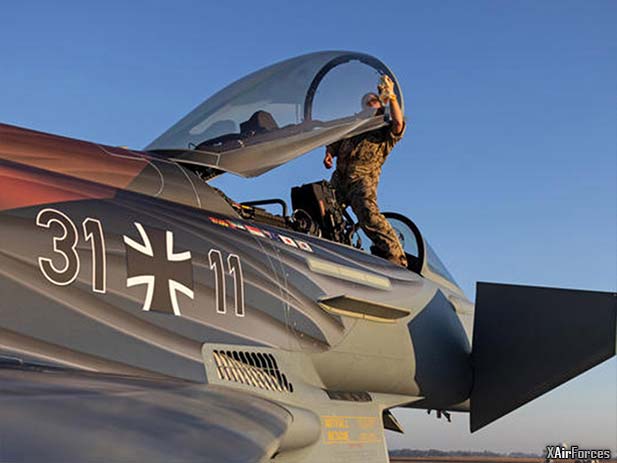
In addition to deep maintenance, the partnership provides high-frequency customer service support. In 2022, the EKZ performed its 1,000th customer service mission, a milestone that highlighted the granular technical support provided to the fleet. This specific mission involved polishing out non-critical scratches on the canopies and windscreens of two Eurofighters—a task essential for maintaining the optical clarity required for the aircraft’s head-up display (HUD) systems and pilot visibility. While 2022 was a milestone year, 2013 remains the record for the highest volume of service calls, with FCA (Forward Component Assembly) teams making 80 individual sorties to support aircraft at various operating locations.
Operational Metric - Value/Record - Contextual Detail
Total EKZ Inspections/Repairs - ~350 - Cumulative total through mid-2023
Cumulative Customer Service Missions- >1,000 - Reached in 2022
Annual Service Call Record - 80 Sorties- Achieved in 2013
Peak Delivery Year - 42 Aircraft - Record set in 2020 during peak production/maintenance
Flight Hours Supported - >850,000 - Total fleet hours for the Eurofighter consortium
The capability of the Manching facility to surge production was demonstrated in 2020, which saw a record 42 aircraft deliveries. This level of output was achieved through a singular focus on order fulfillment and the optimization of the 14-step assembly process that governs Eurofighter production and major overhaul. Furthermore, the flexibility of the cooperation was validated in the wake of the conflict in Ukraine. The resulting increase in flight hours for NATO air policing missions necessitated a rapid adjustment in maintenance scheduling. Last year, the number of contracted Eurofighters at Manching increased from 27 to 31, reflecting the cooperation’s ability to scale its operations in direct response to immediate security requirements.
Software Sovereignty and National Modification Capabilities
A pivotal development in the partnership’s history occurred in 2016, when the SUZ EF achieved the capability to independently perform certified modifications for the entire Eurofighter weapons system. This was a significant achievement in terms of national technological sovereignty, as it allowed Germany to implement changes to software and hardware components that were not originally part of the German development share within the four-nation Eurofighter consortium (Germany, the UK, Italy, and Spain). Since the inception of this capability, more than 40 national modifications have been integrated into the German Eurofighter fleet, specifically designed to address national operational requirements that might otherwise have been delayed by the complex multi-national consensus process.
A primary example of this sovereign modification capability is the 2019 integration of the Recce-Lite reconnaissance pod. This project involved complex software interfaces and hardware adaptations to provide the Eurofighter with aerial reconnaissance capabilities equivalent to those of the specialized Tornado fleet. By "scaffolding" these modifications directly onto the existing airframes in Manching, the SUZ EF ensured that the Luftwaffe could rapidly deploy enhanced capabilities without waiting for a new production lot or extensive international negotiations.
To support these complex integrations, the SUZ EF utilizes a unique test and development environment known as the "Rig". The Rig is a high-fidelity ground-based replication of the complete Eurofighter weapons system, allowing engineers to test software upgrades and hardware changes in a controlled environment before they are flight-tested. This infrastructure is critical for the "operational software fixes" that the SUZ EF can implement within weeks during active exercises, as demonstrated during the "Pitch Black" exercise. In 2023, the topping-out ceremony for the "Sensor Roof Lab" signaled the next phase of this technical evolution, providing a dedicated facility for testing the new E-Scan active electronically scanned array (AESA) radar systems.
Strategic Support of Global Deployments
The Manching cooperation has demonstrated an ability to provide logistical and technical support at extreme distances, far removed from the primary industrial hubs of Europe. The most significant test of this capability occurred in September and October 2022 during Operation Rapid Pacific. This mission was the first deployment of a German Eurofighter contingent to the Indo-Pacific region, requiring the aircraft to operate under challenging environmental conditions and high flight-hour density.
Throughout the deployment, the SUZ EF provided 24/7 support to the contingent, ensuring that any technical issues encountered in the field could be resolved immediately through the user help desk and engineering analysis. The logistical success of the mission was substantial: all six Eurofighters safely returned to their home base in Neuburg after completing 40,000 kilometers per aircraft, accumulating 700 flying hours, and conducting more than 500 air refuelings. During the "Pitch Black" exercise, which was part of the Indo-Pacific deployment, the SUZ EF implemented the first rapid operational software fix in just a few weeks, proving that the technical sovereignty established in Manching has direct and immediate utility for pilots in the cockpit.
The ability to sustain a high-performance combat platform in remote theaters is a direct result of the integrated training programs managed at Manching. Since 2004, the SUZ EF has conducted a one-year internal systems engineer course for engineers and computer scientists. This course, which began just as the first five Eurofighters entered service at Tactical Air Force Squadron 73 "Steinhoff" in Laage, is designed to turn specialists into Eurofighter-specific experts. By training soldiers and civilians together, the course creates a unified technical culture that is essential for the rapid troubleshooting required during high-stakes deployments like Rapid Pacific.
Maintenance and Sustainment of the Panavia Tornado Fleet
While the Eurofighter represents the current and future core of the Luftwaffe, the cooperation in Manching also plays a vital role in sustaining the Panavia Tornado fleet. On November 24, 2004, the Tornado System Support Centre (SUZ) was established to manage the software architecture of the aging but mission-critical platform. The teams in the Tornado SUZ are responsible for developing and maintaining the software for avionics, mission evaluation, and the Electronic Warfare Centre.
As the Tornado fleet approaches the end of its service life, the focus has shifted toward structural preservation and life-extension measures. On November 28, 2014, the Tornado Cooperation Cell (TKZ) was founded specifically to carry out repair work, major overhauls, and Service Life Enhancements (SLE). These measures are essential for keeping the Tornado airworthy and mission-capable until its specialized roles can be fully assumed by modern platforms like the Eurofighter EK and the F-35. In 2022, the TKZ teams successfully repaired 23 Tornados and conducted 32 customer-service missions, underscoring the ongoing intensity of the maintenance effort required for this legacy platform.
Platform - Support Cell - Function - 2022 Activity
Eurofighter - EKZ - Maintenance/Repairs - 1,000th service call reached
Eurofighter - SUZ EF - Software/Systems - National mods & Rapid Pacific support -
Tornado - SUZ Software - Avionics & EW maintenance
Tornado - TKZ - Life Extension - 23 repairs & 32 service missions
Technical Characteristics and Performance of the Eurofighter Typhoon
The maintenance and upgrade activities in Manching are designed to optimize a platform that is already world-leading in its performance characteristics. The Eurofighter Typhoon is a twin-engine, canard-delta wing multirole aircraft optimized for both air superiority and ground attack. One of its most distinctive features is its ability to reach supersonic speeds without the use of afterburners—a capability known as "super-cruise"—which increases the aircraft’s fuel efficiency and reduces its infrared signature.
The aircraft's propulsion system consists of two EJ200 engines, each producing approximately 60,000 N of thrust without afterburner and over 90,000 N when the afterburner is engaged. This thrust-to-weight ratio allows the Eurofighter to take off without afterburner during normal operations, significantly reducing noise pollution at German airfields. The performance envelope of the Eurofighter is remarkable, with a maximum takeoff weight of 23.5 tonnes and the ability to climb to 11,000 meters in just two minutes. This responsiveness is a key factor in its role for Quick Reaction Alert (QRA) duties, where it must intercept unknown or hostile aircraft approaching national territory.
The integration of the Aerodynamic Modification Kit (AMK) further enhances these characteristics by increasing maximum wing lift by 25 percent. This translates into higher turn rates, a tighter turning radius, and improved nose-pointing capability at low speeds, ensuring that the Eurofighter remains dominant in both within-visual-range (WVR) and beyond-visual-range (BVR) combat scenarios.
The Modernization Roadmap: Tranche 4 and Tranche 5
The Luftwaffe is currently in the midst of a significant fleet modernization effort coordinated through Manching. Under the "Quadriga" contract signed in 2020, Airbus is manufacturing 38 Tranche 4 Eurofighters to replace the oldest Tranche 1 models. These aircraft will be delivered between 2025 and 2030, featuring 30 single-seaters and 8 twin-seaters. The Tranche 4 aircraft represent a significant leap in sensor technology and computing power, providing a more robust platform for the integration of next-generation weapons systems.
On October 15, 2025, the German government further committed to the platform by ordering an additional 20 Tranche 5 Eurofighters. These aircraft, scheduled for delivery between 2031 and 2034, will serve as the technical vanguard of the fleet. Key features of the Tranche 5 and the broader modernization program include:
⦁ E-Scan Radar: The replacement of the mechanically steered CAPTOR-M with the ECRS Mk1 active electronically scanned array radar, which provides superior detection range and multi-target tracking capabilities.
⦁ Electronic Warfare: The integration of the Arexis sensor suite from Saab, which will be retrofitted into existing aircraft and installed in new production models to enhance electronic combat capabilities.
⦁ Weaponry Integration: The procurement of Brimstone 3 missiles, IRIS-T Block 2, and modernized AMRAAM (C8 and D3) missiles to ensure the fleet remains lethal in increasingly complex air environments.
⦁ HMI Modernization: The introduction of the Striker II Helmet-Mounted Display to ensure the cockpit interface remains intuitive for pilots managing multiple sensor inputs.
Program Phase - Aircraft - Count - Delivery Window - Key Enhancements
Tranche 4 (Quadriga) - 38 - 2025–2030- Replacement of Tranche 1 models; updated avionics
Eurofighter EK- 15 (+15) - 2030 Onward - Specialized electronic warfare variant with Saab Arexis
Tranche 5 - 20 - 2031–2034 - E-Scan radar, Arexis suite, and bridge to FCAS
The Eurofighter EK: A Sovereign Electronic Combat Solution
A significant strategic development within the Manching partnership is the creation of the Eurofighter EK (Elektronischer Kampf). This variant is specifically designed to replace the Tornado ECR in the role of identifying and neutralizing enemy radar and air defense systems. Germany is currently equipping 15 of its jets for this role, integrating them with specialized anti-radar missiles and the Arexis sensor suite. The Eurofighter EK will receive NATO certification by 2030, providing Germany with a sovereign electronic warfare capability that is critical for maintaining freedom of action in contested airspace.
This project also serves as a testbed for Manned-Unmanned Teaming (MUM-T) concepts. The System and Teaming Advanced Research (STAR) demonstrator, based at Manching, is exploring how crewed Eurofighters can command uncrewed "wingmen" to perform high-risk jamming or reconnaissance missions. This podded approach to integration allows for faster certification and deployment, with operational evaluations slated to take place at the newly established National Test and Development Center for Eurofighter (NaTE EF) from 2026 onwards.
Economic Impact and the Industrial Ecosystem
The cooperation at Manching is not only a security asset but a major economic engine for Germany and Europe. The Eurofighter program is the largest defense initiative in Europe, supporting over 100,000 jobs across the continent. In Germany alone, the program secures 25,000 jobs through a network of 120 domestic suppliers. The concentration of this expertise in Manching has created a unique "Centre of Excellence" that draws on the precision of skilled craftsmanship and the innovation of advanced aerospace engineering.
The economic projections for the program are substantial. The Tranche 4 order alone is expected to contribute approximately €6.5 billion to the German gross domestic product (GDP) by 2060 and generate over €3.6 billion in tax revenue. Across the four core nations, the program is anticipated to contribute €58 billion to total GDP over the next decade. This long-term industrial commitment ensures that Germany maintains its strategic autonomy by preserving the manufacturing and engineering skills necessary to build and sustain high-performance combat aircraft.
Economic Indicator - Value - Scope
European Employment - >100,000 Jobs - Across 400 companies in Europe
German Employment - 25,000 Jobs - Including 120 local suppliers
Tranche 4 GDP Impact- €6.5 Billion - Projected contribution to Germany by 2060
Tranche 4 Tax Revenue - €3.6 Billion - Projected revenue for Germany by 2060
10-Year Core Nation GDP - €58 Billion - Total contribution for UK, DE, IT, ES
Conclusion: A Bridge to the Future Combat Air System (FCAS)
The twenty-year partnership between Airbus and the German Air Force in Manching has evolved from a maintenance agreement into a cornerstone of European defense. By achieving technical sovereignty, sustaining legacy platforms, and modernizing the core combat fleet, the collaboration has ensured that the Luftwaffe remains a reliable partner for collective NATO security. The continuous development of the Eurofighter through Tranche 4 and 5 ensures that the platform will remain the backbone of German air defense well into the 2060s.
Looking ahead, the work being done in Manching serves as the essential technological and operational bridge to the Future Combat Air System (FCAS). Scheduled for operational service from 2040, FCAS will see the Eurofighter operating in a networked environment with both crewed and uncrewed aircraft. The integration of E-Scan radars, electronic warfare suites, and MUM-T capabilities in Manching today provides the foundational technologies for this next generation of air power. The success of the last twenty years has proven the flexibility and reliability of the cooperative model, ensuring that as the threats of the future evolve, the partnership in Manching will be ready to meet them.
Photo: Two decades of integrated industrial cooperation ensuring operational readiness, technical sovereignty, and mission-critical support for the Eurofighter and Tornado fleets. (Photo by Airbus)
Editor: Osman Tüfekci (©XAirForces Defense Aviation and New Technologies News Editor from Turkiye)
Keywords: Airbus, German Air Force, Eurofighter, defense cooperation, military aviation, aerospace industry, fighter jets, defense technology, European defense, NATO, strategic partnership, aircraft innovation, defense news, military collaboration, aviation history, aerospace engineering, defense anniversary, joint projects, European military cooperation, defense industry trends, Manching, Eurofighter Typhoon, Panavia Tornado, Eurofighter Cooperation Cell (EKZ), System Support Centre (SUZ EF), Tornado Cooperation Cell (TKZ), mission readiness, technical sovereignty, national modifications, Recce-Lite, Operation Rapid Pacific, maintenance and repair, defense industrial base.



 4/5 Generation Fighters