Azerbaijan Inducts JF-17 Thunder Fighters into Air Force Inventory

Pakistan-supplied JF-17 Block III jets mark a strategic shift in Baku’s defense posture and regional airpower balance
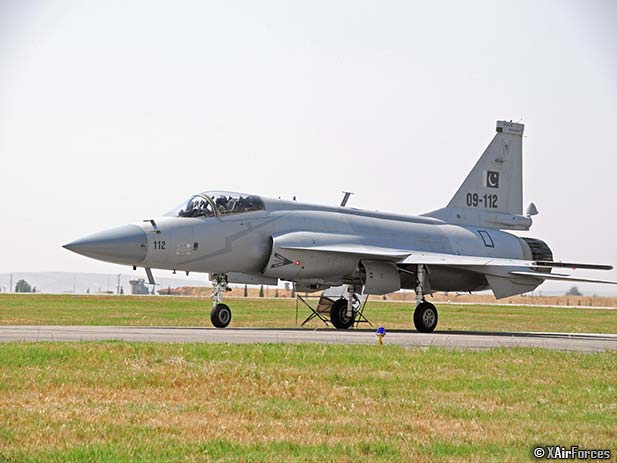
Azerbaijan has officially received its first batch of Chengdu-PAC JF-17 Thunder fighter jets, including both single-seat JF-17C Block III and dual-seat JF-17B variants. The aircraft were first spotted at Nasosnaya Air Base near Baku in mid-October and later participated in the November 8 Victory Day parade.
According to official sources, five JF-17s were initially deployed by the Pakistan Air Force for the joint exercise “Indus Shield Alpha.” These aircraft remained in Azerbaijan, with PAF markings removed but serial numbers intact. Subsequent imagery confirmed the presence of six JF-17C and three JF-17B jets, now bearing Azerbaijani insignia.
This transfer marks Azerbaijan as the fourth global operator of the JF-17 platform, joining Pakistan, Myanmar, and Nigeria.
🛰️ Strategic Analysis: Azerbaijan’s JF-17 Acquisition and Its Regional Impact (January 2026)
1. Strategic Realignment
Azerbaijan’s procurement of the JF-17 Thunder Block III represents a departure from its traditional reliance on Russian and Israeli platforms, signaling a new axis of defense cooperation with Pakistan and China. The $4.6 billion deal for 40 aircraft is one of the largest post-Soviet airpower acquisitions in the region.
2. Capabilities and Combat Value
The JF-17 Block III offers:
• Active electronically scanned array (AESA) radar
• Helmet-mounted display systems
• Integrated electronic warfare suite
• Beyond-visual-range (BVR) missile capability
These features position the JF-17 as a cost-effective multirole fighter capable of air-to-air and air-to-ground missions, suitable for Azerbaijan’s mountainous and contested border zones.
3. Regional Implications
• Armenia: The acquisition may prompt Yerevan to seek upgrades to its Russian-supplied Su-30SM fleet or deepen cooperation with India and Iran.
• Turkey: While a close ally of Azerbaijan, Ankara may view the JF-17 deal as a signal that Baku is diversifying beyond Turkish platforms like the Bayraktar TB2.
• Russia: Moscow’s influence over post-Soviet air forces faces erosion as Azerbaijan turns to Sino-Pakistani alternatives.
4. Operational Integration
The participation of Azerbaijani pilots in joint exercises and parade flights suggests rapid integration and training, with Pakistani advisors likely supporting initial deployment phases. The presence of Col. Novruz Tahirov in the lead twin-seat jet during the parade underscores this transition.
5. Strategic Messaging
The timing of the induction—during Victory Day celebrations—serves as a symbolic assertion of airpower modernization and a message to regional rivals. It also reflects Azerbaijan’s intent to project strength and autonomy in its defense choices.
Comparative Snapshot
Feature ------------------ JF-17 Block III (Azerbaijan) Su-30SM (Armenia) ---- F-16 (Turkey)
Radar -------------------- AESA -------------------------- Passive phased array --- AESA (modernized)
BVR Missile Capability -- Yes -------------------- ------- Yes ----------------------- Yes
Cost Efficiency ---------- High ---------------------------Moderate ---------------- Moderate
Supplier ------------------ Pakistan/China -------------- Russia ------------------- U.S./Turkey
Strategic Alignment ------South-South ----------------- CSTO -------------------- NATO
🧠 Conclusion
Azerbaijan’s JF-17 acquisition is more than a hardware upgrade—it’s a strategic pivot. By embracing a Pakistan-China platform, Baku is signaling its intent to reshape its defense ecosystem, reduce dependency on traditional suppliers, and assert a more autonomous regional posture.
If integration continues at this pace, Azerbaijan could emerge as a model for mid-tier air forces seeking affordable, modern, and politically flexible fighter solutions.
Source: ©XAirForces News, 12 January 2026
Photo: Azerbaijan JF-17 Thunder acquisition. Azerbaijan has received its first JF-17 Thunder fighter jets from Pakistan, including Block III and dual-seat variants, marking a strategic shift in its air force modernization and regional defense posture. (2011 06 04 PakAF JF-17 (09-112) Solo Air Show. Photo by Huseyin Tufekci©XAirForces)
Editor: Huseyin Qadirov (Turkish World ©XAirForces News Editor from Baku/Azerbaijan)
Keywords: Azerbaijan, JF-17, Thunder, Pakistan, Block III, fighter jet, air force, Nasosnaya, Victory Day, Indus Shield, Azerbaijan Air Force JF-17 delivery, Pakistan-Azerbaijan defense cooperation, JF-17 Block III capabilities, dual-seat JF-17B deployment, Nasosnaya Air Base sightings, Indus Shield Alpha joint exercise, Victory Day parade Baku, PAF aircraft transfer, Chinese-Pakistani fighter export, regional airpower balance South Caucasus
Azerbaijan Inducts JF-17 Thunder Fighters into Air Force Inventory
(12.01.2026)
|



 4/5 Generation Fighters